 uluquint
Why Contactless Smart-Cards Are Quietly Rewriting Crypto Security
So I was thinking about the old leather wallet on my dresser and how ridiculous it feels to carry cash anymore. Whoa! The shift to contactless payments taught us convenience, but digital-asset custody has mostly lagged behind. Initially I thought hardware wallets had settled the debate, but then realized a missing piece: seamless, everyday form factors that feel like a credit card. Hmm… something felt off about expecting people to carry a dongle or memorize long seed phrases when NFC smart-cards could do the heavy lifting.
Here’s the thing. Contactless smart-cards bring crypto into the pocket world where people already tap and go. Seriously? NFC is nearly universal on phones now, and user expectations center on speed. My instinct said: if it works like Apple Pay or a transit card, adoption hurdles drop dramatically. On one hand, there are security trade-offs to consider, though actually, wait—let me rephrase that: the trade-offs are different, not necessarily worse.
Let me be blunt—usability matters more than we admit. Whoa! If the user experience is clunky, people will use custodial services again, even if custody risks are higher. I used to test novel wallet flows at night and I can tell you: users bail fast. So somethin’ as simple as a thin smart-card that communicates over NFC changes the psychology of holding your keys.
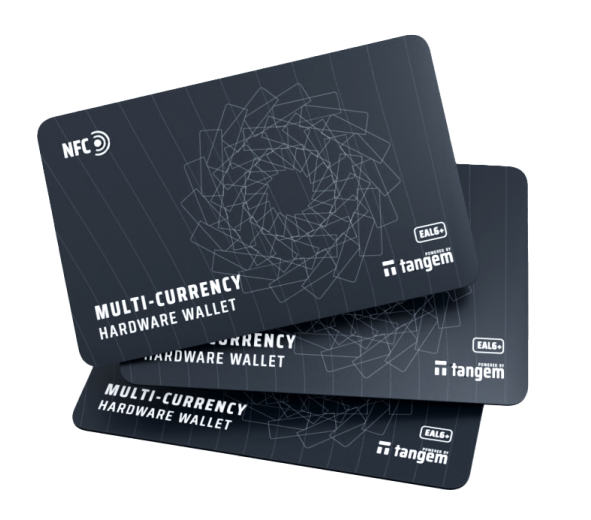
How NFC smart-cards blend convenience with cold storage
Contactless cards operate like a portable, tamper-resistant vault that talks to your handset briefly and then disappears. One-touch interactions feel familiar, yet under the hood the card can store private keys securely. I’m biased, but I’ve had more non-technical friends adopt a hardware card than a desktop-based wallet—go figure. Check out the tangem hardware wallet for an example of how these cards are packaged and integrated into everyday flows. On top of that, pairing is often frictionless: hold near the phone, approve, done.
Security skeptics will kneel over the lack of a screen on some cards. Really? Okay, valid point. Initially I thought a lack of local UI was a fatal flaw, but then I watched a user reject a complicated password flow and choose a secure card instead. On one hand, in-card secure elements isolate keys; on the other, you need a strong host-side verification schema to prevent silent approvals. That’s why the best designs combine NFC plus an app that confirms transaction details clearly—no cryptic hex strings.
Performance matters. Whoa! NFC latency is trivial for signing transactions, which keeps the experience fast. Many cards implement secure chips that perform ECDSA or Ed25519 operations internally, so the private key never leaves the card. I remember testing a prototype where signing felt instant—really instant—unlike some Bluetooth devices that sleep and wake and annoy you. There are trade-offs though; offline signing models require careful UX to ensure users don’t sign bogus requests unknowingly.
Let’s talk threat models for a second. Hmm… The baseline: card compromise, phone compromise, and human error. If your phone is compromised, a malicious app could try to trick you. Initially I thought that hardware isolation solved everything, but then realized user prompts and canonical transaction displays are essential. Actually, wait—let me rephrase that: hardware isolation mitigates key-exfiltration, but social-engineering and coerced approvals remain threats. So multi-layer defense is crucial.
One practical pattern I like: use the card for key storage and the phone for verification, with clear human-readable transaction summaries. Whoa! This two-part choreography keeps exposure minimal. Developers should avoid overly technical jargon during signing; show amounts, recipient names, and an explicit “confirm” step. In everyday trials I saw that users trust a familiar tap gesture far more than a long seed phrase prompt. That psychological trust translates directly to security in the wild.
Integration with payment rails is interesting. Seriously? Yeah—there are design challenges but also opportunities. Imagine bridging fiat rails for on-ramps through card-backed gateway services without ever exposing private keys. That sounds convenient, and it is, but regulators and compliance add complexity. I’m not 100% sure how fast the regulatory landscape will move here, so it’s a watch-and-adapt game.
Hardware design choices matter a lot. Whoa! Card durability, battery-free operation, and secure-element certification all stack up. I once saw a card fail in a bike messenger’s back pocket—lesson learned: robustness isn’t optional. Some cards use energy harvesting so they never need charging, which is brilliant for everyday use. Yet certification like Common Criteria or EMVCo helps build trust, and lack of it can be a real adoption blocker.
Privacy considerations are another layer. Hmm… Contactless interactions can be logged by proximity readers or apps, so minimization is key. Initially I thought logging was unavoidable, but then realized systems can minimize metadata, avoiding centralized telemetry. On one hand, useful features like backup or recovery rely on some data exchange; on the other hand, too much networked dependence defeats the point of self-custody. Designers should aim for optional, opt-in telemetry only.
Let’s touch on recovery—this part bakes nerves into many users. Whoa! The old metal-seed-phrase model is brittle for non-technical people. Smart-cards enable alternative recovery: redundant cards, backup tokens, or social recovery schemes mediated by the card. I’m biased toward multi-card backups because they mirror how we think about insurance—spread the risk. But be careful: it’s easy to overcomplicate recovery flows and create points of failure.
Adoption will hinge on ecosystems. Seriously? Absolutely. Wallet apps, exchanges, and merchants need to accept and support NFC-based signing flows. I remember when contactless payments crossed a tipping point; network effects mattered more than tech specs. On the developer side, standardized APIs and clear UX patterns will accelerate integration. Without them, you’ll get a patchwork of incompatible solutions and frustrated users.
Common questions
Are smart-cards as secure as traditional hardware wallets?
They can be. Whoa! The key is a secure element inside the card that performs all cryptographic operations. If implemented well and paired with good host verification, a card can provide similar guarantees to a USB device, with better convenience for everyday use.
What happens if I lose the card?
Plan for loss. Really? Yes—use multi-card backups, recovery seeds stored offline (metal is still great), or social recovery. The card itself should support mechanisms like PIN locks or tamper-resistance to make casual loss less catastrophic.
Can I use these cards for contactless merchant payments?
In many setups, yes. Some solutions bridge tokenized payments with on-chain signing so you can both pay a merchant and authorize a crypto transfer, though regulatory and integration complexity varies by region. I’m not 100% sure every merchant will be ready, but adoption grows fast once the UX is painless.
Okay, so check this out—contactless smart-cards won’t replace every wallet overnight. Whoa! They will, however, lower the barrier for millions who want self-custody without a degree in cryptography. I’m biased, but that’s exciting. There’s risk and there are unknowns, but the user-centered promise is real. For anyone curious about trying one, the tangem hardware wallet is a practical snapshot of how the tech looks and feels in the wild.
